A Family Pilgrimage
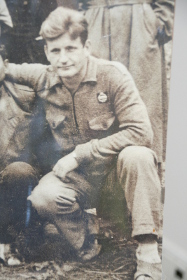
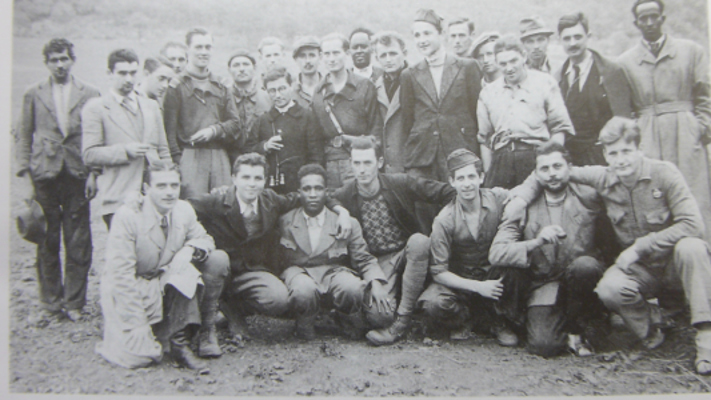
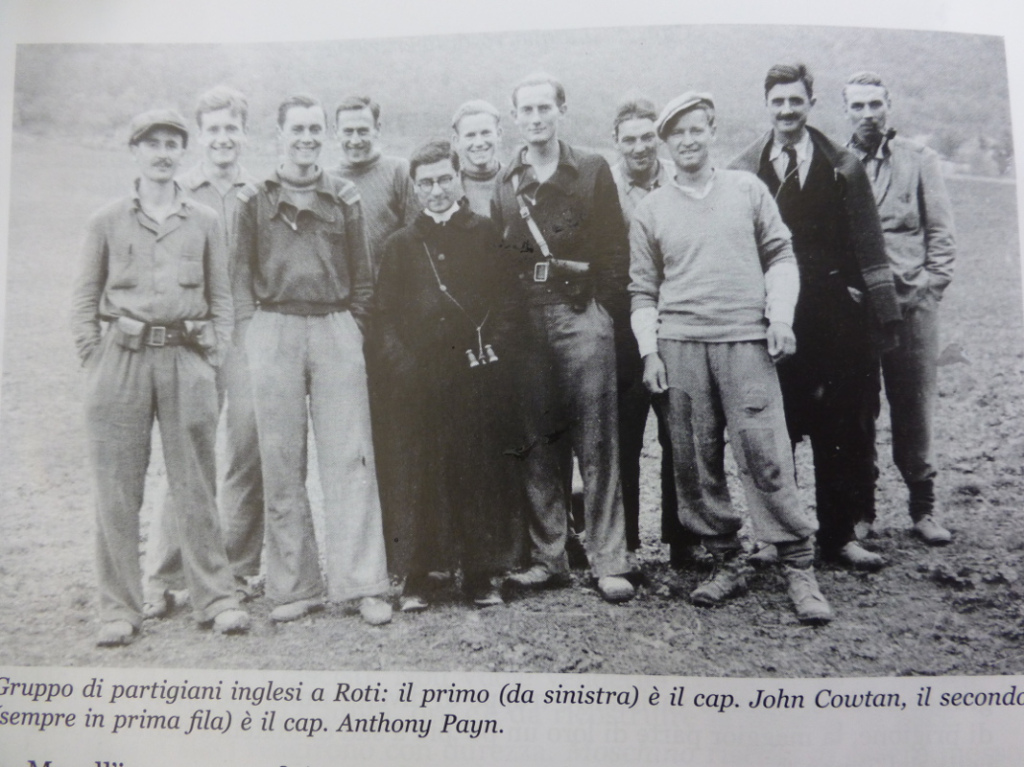
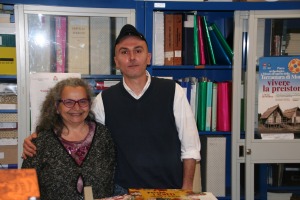
A phone call was made and sure enough, a few minutes later in through the door burst Igino Colonnelli, a local academic who had written a book about the resistance and partisan activity in the area of the town. He promptly presented me with a copy of the book which contained never before seen photos of my father, and took us to the local hamlet of Braccano, where he had recently run an exhibition about Gruppo Roti.
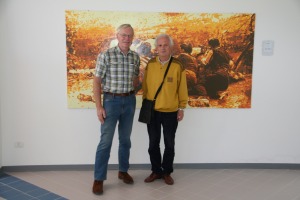
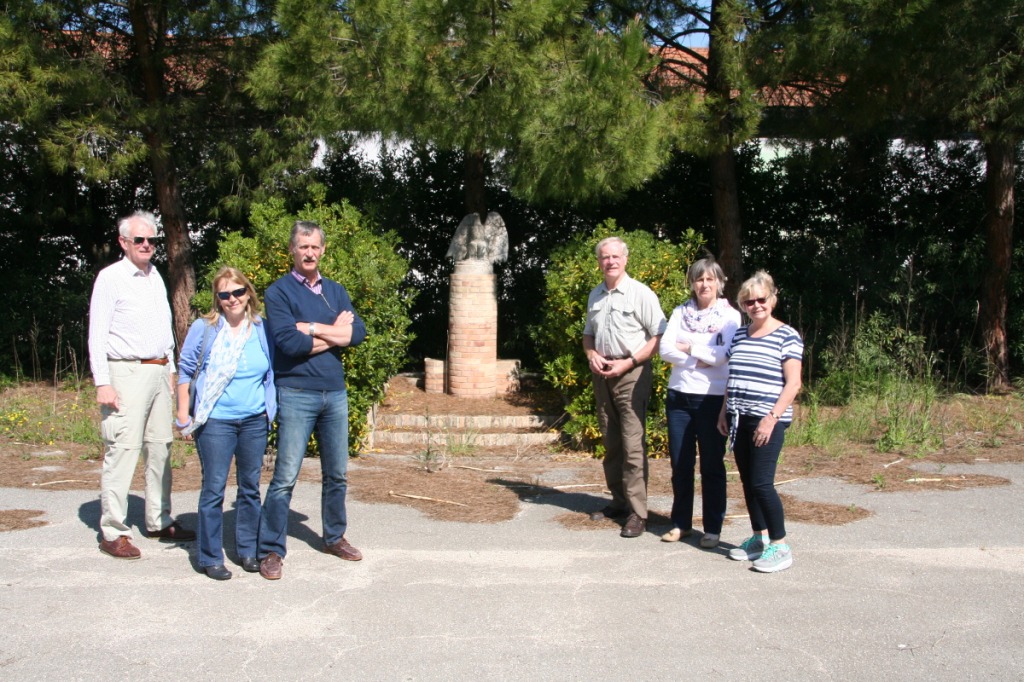
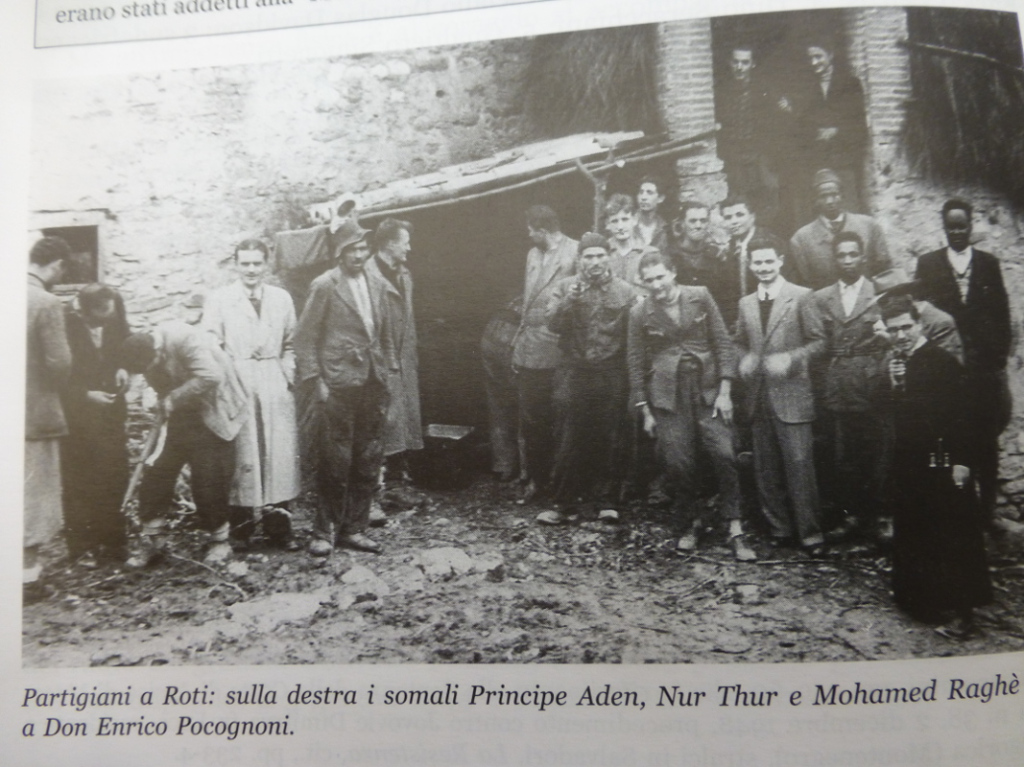
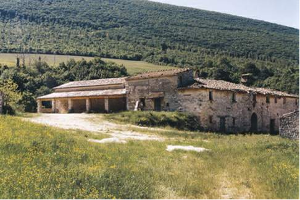
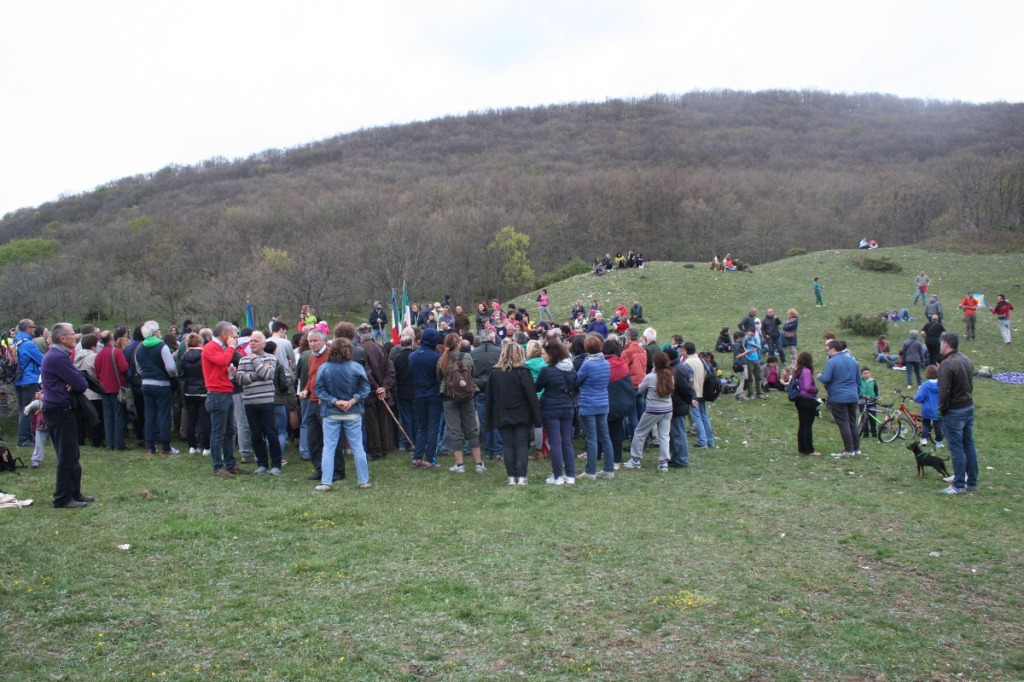
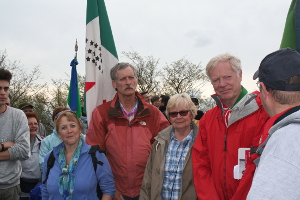
He was also able to describe exactly where the group had been based, an old monastery in the nearby mountains. Time was against us on that occasion but I promised I would return this year on the 25th April. The 25th is celebrated as Italy’s national day, and Gino explained that many of the local population would be remembering some of Gruppo Roti who lost their lives during their campaign against the Germans and Italian Fascists. On the 24th April 2015 our group, the three of us and our spouses, turned up in the square at Matelica to meet Gino Colonnelli as arranged. There we also met Danilo Baldini, the son of Guiseppe Baldini one of the Italian leaders of the group. Our hosts had also had the foresight to invite an English expat, Douglas Allum to act as our translator! Together we then headed into the hills to locate the old monastery, now a ruin, to see exactly where my father had spent almost 12 months of his life while engaged in a guerrilla war. It was a sobering afternoon as we walked about the abandoned property and tried to imagine what life must have been like for them as they lived through the winter in 1943/44.Gruppo Roti outside the Monastery
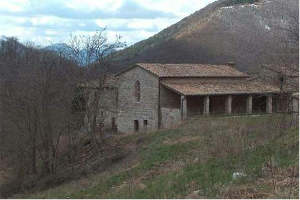
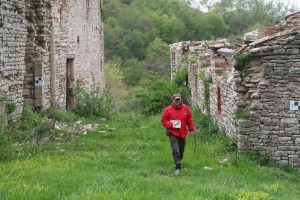
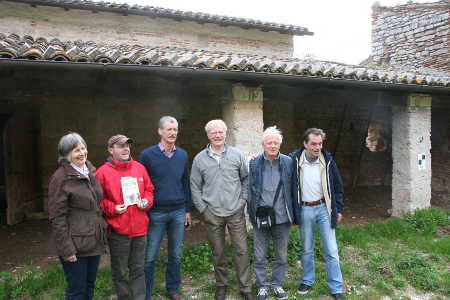
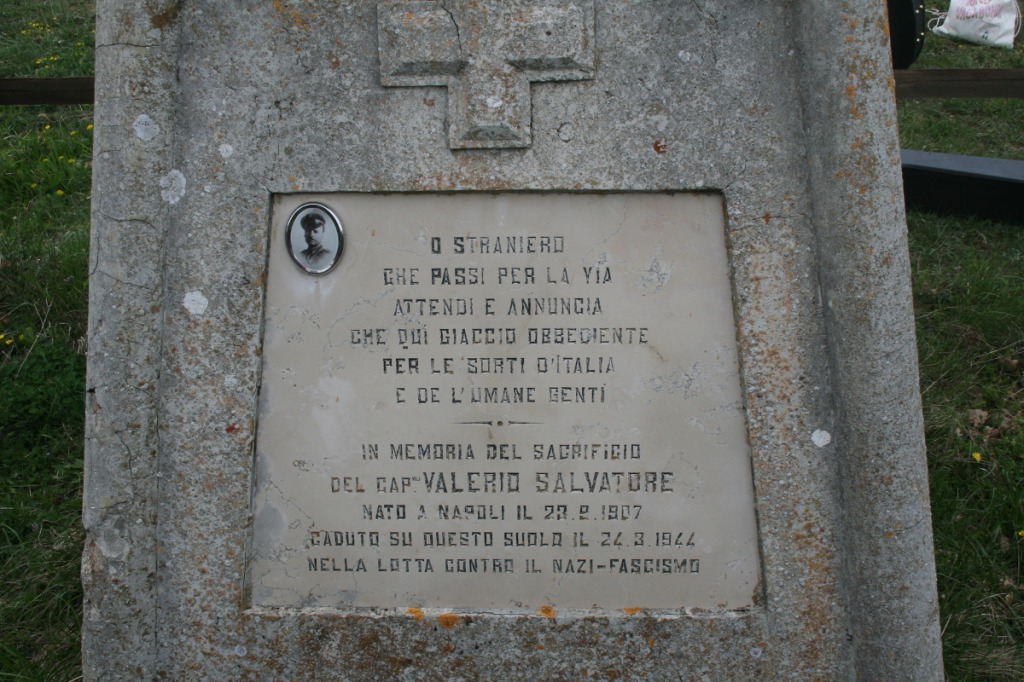
The event is commemorated annually and we were honoured to be part of it. Danilo Baldini insisted on ‘presenting’ us to the Italian audience as we were apparently the first English people to attend this event for over 30 years!
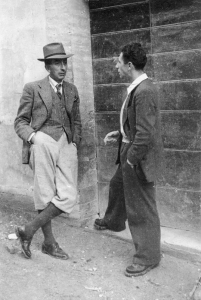
Over dinner that evening we tried to reflect on our experiences of the last few days. We had uncovered so much we did not know previously, but there are are still huge gaps in our knowledge of my father’s activities. Some of us will be returning to Italy next year to see what else we might uncover, and enjoy more good food and wine in the company of some wonderfully friendly people! If you are interested in reading about the type of operations that many partisan groups then please read on! Partisan Activity in the Metallica Area 1943-44 Research has disclosed the following information about the group. After the Armistice on the 8 September, many Italian soldiers stationed in Matelica took refuge in the surrounding countryside, with the help of the ‘contadini’ population, the ‘peasant farmers’. Many young people from Matelica, also chose to move away from their families and hide in the mountains, rather than to serve the Nazi-Fascists authorities. This was a familiar pattern over much of Italy as the resistance against the Germans gathered strength. Three partisan groups formed in the area of Matelica almost within walking distance of each other. These three came under the control of the 1st “Mario” Battalion of the Brigade “Garibaldi” established in Ancona. The groups were the “San Fortunato” in the locality of San Fortunato di Poggeto, North of Matelica; the group “Hermit”, on Monte Gemmo at Esanatoglia; and the group “Roti” on Monte Canfaito, East of Matelica. The latter was rather ‘international’ in its makeup: when it formed in October 1943 the group included about 20 Italians, a dozen former British POWs, ( Including our father), Slavs, and latterly some Somali! The Group Roti ook refuge first on Monte San Vicino (near Matelica)and then moved to Roti, which was an ancient Benedictine monastery which became the base of their operations. The monastery is near the hamlet of Braccano from which the group could control the entire road from Matelica; It was also an ideal location because it was surrounded by a dense woods and steep mountains which made for a simple escape in times of danger. Lieutenant Giuseppe Baldini, an officer who had fought as part of the Italian forces in Russia was appointed Commander of the partisan group near Matelica.Guiseppe Baldini (right) with Tommaso Mari, and Italian/American
Acquiring Weapons and Food
As with all the other groups, in the first few months there were two compelling problems: finding weapons to fight with and obtaining sufficient food supplies. The hamlet of Braccano became the centre of supply for partisans. This included livestock that were slaughtered instead of being kept over the winter. On October 25, 1943 the partisans of Roti and Valdiola groups decided to carry out an operation to secure more weapons. Local intelligence indicated that there was an armoury at the Villa Spada, in the municipality of Treia, some 25 miles away near the larger town of Macerata.The Villa Spada circa 2012
![DSC08631[1]](/media/images/stories/escapers-evaders/personal-stories/a-family-pilgrimage/DSC086311-300x225.jpg)
The villa Spada had been used as an ‘internment’ camp to house a mixture of female political prisoners and some from overseas. Although it was garrisoned by a small military guard force the partisans felt they could overcome them. At approximately 16.00 on the 25th October 1943 a group of about 5 set out from Roti, led by Lt Baldini and including Tony Payne and our father. Apparently while en-route both leaders fell into a ravine about 20 feet deep but were relatively unscathed! The intention was to rendezvous with the men from the other group near the villa, which they did at about midnight. The villa was assaulted and after a short but fierce firefight the partisans made off with a significant haul of weapons. They returned to Roti tired, wet but relatively unscathed. A few days later they ‘liberated’ a significant quantity of ammunition from ta train while it was ‘parked’ at the railway station of Matelica. On the 20 November, the group opened the grain storage warehouses in Matelica, and after securing some for themselves allowed free access to the local population, who promptly proceeded to empty them. The fragmented nature of the partisan organisation, and in particular the political differences between them made coordination of partisan activities difficult. This also applied to the supply of arms and other supplies by the Allies. As a result few weapons were received from aerial resupply until 1944, and in the interim groups had to scavenge what they could. In February the group took the opportunity to acquire more weapons, this time by carrying out a raid against the aerodrome at Jesi where they ‘liberated’ some machine guns designated for fitting into repaired aircraft. The Role of Fascist Informers In October 1943 there occurred a significant episode which illustrates the inter-faction strife within the resistance groups in Italy. The Commander of Roti, Giuseppe Baldini was informed by a young resident of Matelica that a spy in the service of the Nazi/Fascists was living locally. Baldini together with a British officer from the group, disguised as Germans, went to the home of the spy, who welcomed them warmly. Believing both to be Nazi officers he also revealed the whereabouts of hidden weapons and also that he held a pass signed by the local Consul Eugene Caradonna, which would have allowed him to move freely about the area. He also revealed that partisans were hiding in Braccano and that a local priest, don Enrico Pocognoni, was acting as an informant and collaborator for the partisans. When the two revealed their true identity, the man “shook with fear”! The two partisans took him to the Roti monastery, where he was held captive, while the group discussed what to do with him. The Slav contingent wanted him to be executed, but both Baldini and the British group were opposed, as was don Pocognoni when he heard of the man’s capture. Eventually the prisoner was freed; He was warned and told to leave the area or he would be shot. However a few weeks later the man returned to Roti bringing with him a supply of lard and oil for the group. After several audacious operations by the group, the informer was summoned by the local Nazi/Fascist authorities who demanded information. As a result, at dawn on November 27 1943 Matelica was surrounded and occupied by hundreds of fascists. The local residents were gathered in the square and some partisans, including Lieutenant Baldini and professor George Simonetti, were arrested. In the afternoon the fascists went to Braccano, and broke into the Church and a number of local parish houses, looking for Don Enrico Pocognoni. Failing to find him, they left, but soldiers took as hostages his mother and sister, who were taken to Macerata and interrogated by the head of the Ferazzani province. His sister was freed a few days later on the condition that she persuaded her brother to report to the authorities in Macerata, where he was threatened with execution if he continued to work for of the partisans. The events of the 27th November seemed to bring temporary halt to the partisan activities in the area of Matelica. A number of British and Slav members of the group moved away but at the end of January 1944, with the return of former members who had been released from prison in Ancona, the Group Roti once more resumed operations. German/Fascist Counter Partisan Operations On the morning of 22 March the partisan group “Hermit” bolstered by members of Group Roti including my father moved to Mt Poggio San Vicino because of the impending arrival of an aerial resupply of arms and ammunition. As a result only a small number of men remained in the hamlet of Braccano. At the same time, the Germans and local Fascists had decided to mount a “rastrellamento”, or roundup/destruction of partisans in the whole area. Braccano had been targeted specifically because the Fascists believed it was the centre of the partisan command. The operation began when Fascists took the priest, Don Enrico Pocognoni and several other suspected partisans from their homes and executed them in a field in the village. Local documented history recalls the event as the “Braccano massacre”. The remainder of the group, some distance away at the Roti monastery were duly warned of the impending arrival of significant enemy forces and were able to conduct a fighting withdrawal into the woods and nearby (very steep!) mountains. One member of the group in particular, Salvatore Valerio is remembered to this day. A former Italian soldier who fought in N Africa, he joined the partisans in 1943. During the German/Fascist operation on the 22nd March he apparently lost his life holding up the enemy while other members of the group made their escape. It was to his memorial that we travelled on the afternoon of Saturday 25th April, for the commemoration of the fight against the Nazi/Fascism. Between the end of March and our father’s ‘recovery’ by Allied troops in early July the group carried out a number of sabotage operations, assisted with the movement of POWs to evacuation points and generally tried to make life for the Germans and Fascists as difficult as possible. The area around Matelica was liberated by allied troops, consisting of New Zealand , Polish and British soldiers of 8th Army, on or about the July 2, 1944. News that he was safe and well finally reached his parents in mid-August, and he eventually made it home to Motherwell in Scotland on the 18th September 1944. When Douglas returned to the UK he weighed in at about 11 stone; his normal “fighting weight” as a 6’ 4” tall scot had been about 16 stone!