Tragedy in the Pyrenees - The High Cost of Freedom
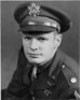
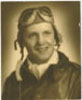
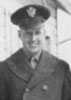
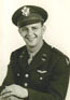
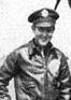
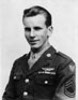
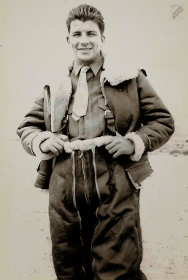
By Warren B Carrah This article is reproduced by kind permission of Warren B. Carah Brighton, MI USA wcarah@livingonline.com. Information assembled from Escape & Evasion Reports, IDPF reports, and personal interviews with escape participants and survivors of the deceased airmen.7 Jan 2008 This is the story of seven American aviators who were shot down over occupied France in 1943. After being supported by numerous helpers throughout France, the aviators from several different units found themselves together on the platform of a railway station on the south side of Paris. They were to complete their dangerous journey home by crossing the Pyrenees into Spain. Here is their story: For many evaders, the final and most formidable obstacle to their escape from occupied Europe was scaling the Pyrenean mountains that separate France from neutral Spain. The hazards are numerous, and in winter the mountain range can be deadly for the unprepared. On 1 Sep 1943, after months of inactivity and marginal food, Lt Olof M Ballinger and S/Sgt Francis “Bud” Owens left the countryside of the Department of Orne, for Paris, and prepared to cross the Pyrenees. On 21 October 1943, Ballinger and Owens joined five other allied airmen and seven Frenchmen at a train station in Paris for the trip south to Toulouse and then St Girons. The other Americans included Major William T Boren (387BG), 1/Lt Keith W Murray (95BG), 2/Lt Harold Bailey (379BG), 2/Lt Charles H Hoover (381BG), and T/Sgt William B Plasket (306BG). Each airman has his own guide for the train journey; all were female members of the Resistance. The Frenchmen in the group, all military officers, were risking the trip so they could join Free French forces in North Africa. The climb up the mountains began on 22 October 1943, the route chosen transiting the small principality of Andorra before turning southeast towards their ultimate destination of Barcelona. However, trouble haunted the expedition from the very beginning. Lt Ballinger found that his legs would not do what he wanted them to do and he experienced severe cramping. The group was barely into the foothills of the Pyrenees at Suc, southeast of St Girons, and Ballinger could go no further. Ballinger was instructed to hide and wait for the guide’s return in eight to ten days. Ballinger spent the next week and a half at a farm near Suc, waiting for the guide’s return. On 29 Oct he was warned that the Gestapo were in the area and that he had to move. On 30 October, Ballinger decided to try crossing the mountain range alone without a guide. He had no compass and so was forced to navigate by the sun and stars. He eventually reached Spain through Andorra, but he was in poor condition. He was briefly taken into custody by Spanish authorities and spent several weeks in Manresa and Barcelona recuperating from his ordeal before moving on to Gibralter and returning to England on 3 December 1943. For the remaining climbers, the going was even more difficult because German sentries seemed to be everywhere. Climbing for 30 hours, progress was very slow as the group avoided enemy soldiers which forced them to take difficult passages through the mountains. As they reached the summit, a fierce storm struck, bringing bitter cold and deep snow. One of the Americans could no longer walk and he collapsed in the snow. He was carried by the others, but the effort was exhausting. Shortly after beginning the descent on the Andorran side of the mountains, two more Americans fell to the snow-covered ground, utterly drained by their ordeal. The lack of food and exercise plus the severe cold had drained away all of their energy. Their feet were frozen due to the disintegration of their French “ersatz” paper shoes which were hardly suitable for the wet climb through several feet of snow and sharp rock. The guides were furious at the delays and they went to great lengths to get their American charges to stand up and move on. At one point a guide pointed his weapon at one of the airmen and ordered him to get up. The airman seemed not to hear and the guide fired his pistol next to the head of the dazed evader. It had no effect. The group had to move on and they reluctantly left the fallen men and proceeded down the mountain. Thus no one witnessed the final hours of Lt Bailey, T/Sgt Plasket or S/Sgt Owens, which probably came on 25 October 1943, at Port del Rat, Andorra. In the spring of 1944, the bodies of the three airmen were discovered by local mountaineers and buried at Arinsal, Andorra. The remains were exhumed by the U.S. Army in 1950 and positively identified in June 1951. The family of S/Sgt Owens elected to have his remains interred at the Ardennes American Military Cemetery in Belgium, while they simultaneously celebrated the requiem high mass at their parish church in Pittsburgh, Pennsylvania on 1 October 1951. Earlier during the war, the Owens family was presented with the Soldiers Medal that their son Francis has earned saving the life of a fellow airman during the bomb loading accident of 23 June 1943 at Ridgewell Field. In the spring of 2006, the Owens family were presented with Bud Owens’ dog tag which had been held by the McConnell family over the years while they searched for his survivors. Francis Owens left the dog tag with the Duval family of La Coulonche [Normandy] when he departed for Paris in September 1943. In 1983, former navigator Paul McConnell was visiting La Coulonche with his wife Marie and given the dog tag by the elderly Duval family in the hopes that Francis Owens’ next of kin could be located in America. Despite a concerted effort, Mr McConnell passed away before he could locate the Owens family. Warren Carah, son of 42-29928’s co-pilot, John M Carah, finally located the Owens family in the Pittsburgh area in early 2006 and arranged for the transfer of the artifact. And so, a part of Francis “Bud” Owens finally returned home some 63 years after he left to fight for his country in the skies over Europe. Allied Escape Group Projected Timeline and Route Escape from Paris to Barcelona October - November, 1943 21 Oct 1943: Group, including the Americans and six French Army and Naval officers, leaves Paris for Toulouse aboard a train. At Toulouse they are turned over to a former French Army Captain and are housed in a hardware warehouse. Bedding consists of a straw over a wooden floor. 22 Oct 1943: Group leaves early in the morning, traveling by train to Montsaunès, Haute-Garonne near St Martory. At Montsaunès the group boards a bus for St Girons, Ariège where they spend the night at a hotel. 23 Oct 1943: In the morning, the group takes a bus southeast towards Massat, Ariège. At Massat, the group leaves the bus and travels on foot to Suc, where they spend the night in a farmer’s barn. 24 Oct 1943: Upon waking at the farm in Suc, Lt Olof Ballinger finds his legs will not function and he is forced to drop out of the escape group. The remainder of the evadees continue south towards Andorra and climb for 30 hours to the France-Andorra border at Port del Rat, a pass in the mountains. The group is forced to pass up a rest cabin in the mountains about halfway between Suc and the Andorran border when it is discovered it is already occupied by another group of escapees. The group experiences very foul weather as they approach the border and Lt Bailey has to be carried and/or dragged for some eight hours by Sergeants Owens and Plasket. The group arrives at Port del Rat in the evening near dark and in a fog. Several evadees collapse from exhaustion including Lt Bailey, T/Sgt Plasket and S/Sgt Owens. All efforts to stimulate the men to continue traveling are futile; Bailey and Plasket are unconscious and Owens cannot control his limbs. The incapacitated men are left in the snow and the group continues on down the slope. One guide leaves the group at this point and returns to France. The remaining guide, Emile Delpy, stays with the evaders until they reach a hotel in El Serrat, Andorra. M Delpy is an employee of British Intelligence and not a member of the usual French Resistance networks that work in the area. 25 Oct 1943: After traveling several hours down the mountain from Port del Rat, the remaining members of the group locate a sheepherder’s stone shack and are able to start a fire and warm themselves and get a few hours of sleep. The French officers with the group, who are in excellent condition, and guide Emile Delpy, go out to search for food and see if they can find the fallen Americans at Port del Rat and return them to the shelter. It appears their efforts were not successful and the French officers stay at another cabin further down the slope for the remainder of the night. Later in the day the groups rejoin and they walk to the village of El Serrat, Andorra. At this village they stay at a hotel for the night and are provided taxi transport to Andorra City the next day. 26-27 Oct 1943: At Andorra City the group catches a bus to the Spanish frontier and then takes a series of cars and busses to the southeast towards Barcelona. The escape group is supported by British SOE agents. 28 Oct 1943: Main escape group arrives in Barcelona. Americans are hosted at the British Consulate. The French members are processed through the French Red Cross. 30 October 1943: Lt Ballinger leaves Suc, Ariège, turns south, and starts climb over Pyrenees alone after the guide fails to return. He has no compass or map and relies on sun and stars for navigation. 31 Oct 1943: Lt Ballinger passes through Andorra City and reaches St Julia de Leria where he spends two days to rest. 2 Nov 1943: Lt Ballinger leaves St Julia de Leria with two Spanish guides. 3 Nov 1943: Main group of evadees who arrive at Barcelona on the 28 October are returned to England from Gibralter. 6 Nov 1943: Lt Ballinger arrives in Gironelli, just south of Berga, Catalonia. 8 Nov 1943: Lt Ballinger arrives in Manresa and is jailed by local police. Later in the day he is driven to Barcelona; He is exhausted and requires medical care. He is released to the custody of the British Consulate. 9 Nov to 26 Nov 1943: Lt Ballinger rests in Barcelona and Alamer (location unknown). 27 Nov 1943: Lt Ballinger drives to Madrid with a Major Clark and boards a train for Gibralter. 28 Nov 1943: Lt Ballinger departs from Gibralter for England via British aircraft. Allied Escape Group U.S. Army Air Forces Participants - Biographical Sketches **