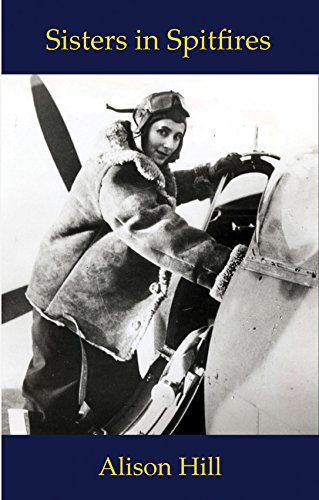
Sisters in Spitfires
Alison Hill’s extensive research into the wartime contribution made by the 164 women pilots of the ATA allows us to experience not only the pure poetry of being airborne in a Spitfire, but also to gain a very personal in
- Author
- Alison Hill
- Reviewed by
- Helen Duffee
- Published
- 2016
Sisters in Spitfires by Alison Hill (Reviewed by Helen Duffee)
This well-structured collection of poems is a delight to read. Alison Hill’s extensive research into the wartime contribution made by the 164 women pilots of the ATA lets us experience the exhilaration of flying a Spitfire while discovering who these remarkable women were.
The opening section, “Private Lives”, offers cameo portraits that capture a quintessential femininity in poems such as “A Touch of Silk” and “Washing Our Hair”, while the narrative “Model Pilot, Model Lawn” beautifully encapsulates the life of Monique Agazarian.
Recruiting pilots from more than twenty-five countries, the ATA ferried aircraft between factories, maintenance units and frontline squadrons. “Making the Headlines”, the second section, documents the press attention—supportive and otherwise—quoted in “Some Slight Confusion” and “Tiger Moth Scramble”, which highlight the pressure these women endured.
An earlier Daily Express article from 1936, recalled in “Do Air Women Lack Charm”, is trumped by the effortless glamour of “Cover Girl”, consolidated by the confidence of “3pm Appointment at Austin Reed”.
The central section, “Ferry Pilot’s Notes”, revels in the flying experience: the Spitfire as “the perfect lady’s aeroplane” in “Simply Bliss”, the yearning for the sky in “The Forecast Looks Doubtful”, and the constant awareness of danger in “Four Miles to the Inch”, “Keep on Flying” and “ATA Cockpit Check”.
In the penultimate section, sharing its title with the book, we meet the poet in 2015, inspired by “A Gathering of Doves” and passing on anecdotes from the past—the comfort within wartime chaos in “Sharing the Guard’s Van” and the light-hearted “Chits for Chocolate”.
“Leaving Legacies” closes the collection, moving from the discipline of “Moving Up the Blackboard” to the tenderness of “Honor Salmon’s Pale Blue Shirt”, and finally to “Tell Me”, attributed to Pauline Gower MBE, whose plea that “our losses weren’t in vain” honours every ATA pilot.